Monday, 5 June 2017

Monday, 16 January 2017
Nature and Purpose of the Music Video

 They are shown throughout many different mediums throughout media, as they can be shown on satellite and cable TV as well as broadband services. For satellite TV, this would be something like Sky or BT, where there would be a satellite in space that would send data to an outdoor parabolic reflector, this then decodes the music video to allow viewing on the television. Meanwhile, a quicker alternative would be cable TV, as it uses radio frequency to deliver the desired television program with it sent by Coaxial cable or through fibre optic cables in the recent years, this would’ve been done by companies such as Virgin Media. For broadband services, which have been growing in popularity in recent years, this is online subscription that you would pay for to be provided through streaming a piece of media.
There are many different channels that are dedicated to music videos that carry the MTV banner, but they are different. This is because they are all each dedicated to a different genre of music, with MTV Hits being used for latest and newest hits. MTV Dance is used to specialized on as the name suggests dance song, for which it mainly plays electronic dance song which is often heard in nightclubs. Other channels like 4Music are many different programmes with some used to play the biggest music videos right now with another playing the latest music videos from current artists, due to this, it helps keep the songs fresh and up-to-date and help attract the teen and younger demographic.

 As well as many music video channels on the TV, there are also many that are based online with the popular being on YouTube and VEVO. By being on YouTube it allows itself to be exposed to a larger audience as many people use the site, while on top of this there are more people that have access the internet rather than a television. On YouTube, there are many famous and popular artists with the name VEVO next to it in the channel’s name. This is because that VEVO is a company that is used by an artist to help ensure that they get a clear as high quality it can be, despite having its own website it is most popular on YouTube with may help allow for a more convenience for the audience.
Purpose Nature of a music video
Music videos are used to serve a purpose as there is a reason for their existence, as during the 1980s nearly all the biggest artist and bands make one for a popular
single they have released. They do this because they act like promo videos to promote their songs and help increase their record sales and make people want to buy their songs and albums. As having a channel on TV was very important before YouTube became known.
single they have released. They do this because they act like promo videos to promote their songs and help increase their record sales and make people want to buy their songs and albums. As having a channel on TV was very important before YouTube became known.

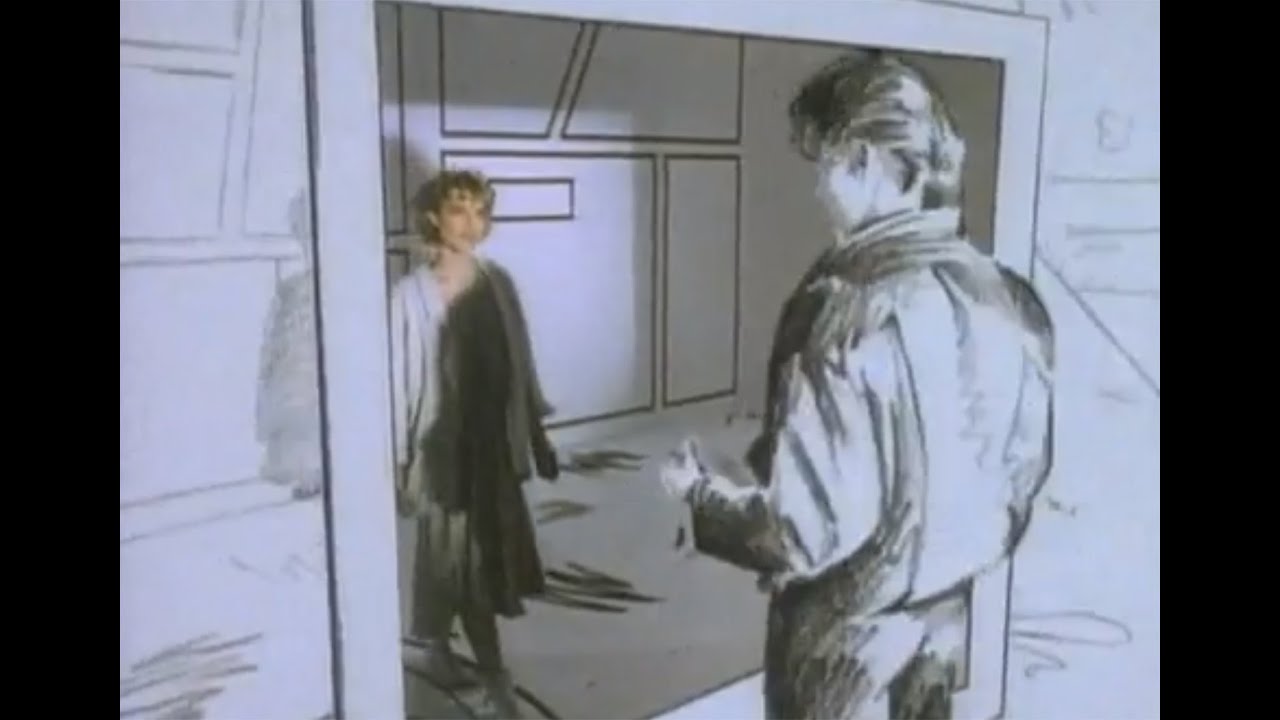 As well as this with a good music video is could help give the artist more publicity, which would in turn help build their public image and enhance their reputation as a good artist. If popular enough then it could lead to a possible fan-base, with people who are willing to your songs and even pay money to see you live in concerts.
 But overall, the aim of creating a good music video is to make enough promotion to make money and continue to remain relevant and famous at the same time. With enough recognition and success, it is possible for the artist to eventually win an award for their achievements whether it’ll be a Brit or even a Grammy. Further boosting ones reputation.
Tuesday, 1 November 2016
History of Music Videos
Music videos had been around for quite a while, ranging from it small start as a comedic short with a duck, to a major competition in the golden age of the 1980's. To a promotion tool, used by every major artist around the world.There are many types of music videos, they can be performance based, concept based and narrative based. A music video can be all of these, although it doesn't happen too often. Due to this, the type of videos tend to reflect the time that has been released in, as the earlier music videos started out as performance based as it would often be the singer singing with a band or an orchestra behind then. However as this got more popular, other artists have decided to become more artistic like Queen, meanwhile some other may have chosen to be more narrative driven like Michael Jackson's Thriller.
 The website that is being used is called Tiki-Toki, which is a website that allows me to make interactive timelines. Which is the perfect website to work with, as I am able to creates several different stories which will help reflect on the music video. As well as this I can add links to connect it with the stories, such as images and videos. To enable me to give visuals interaction, to make it more clear for the viewer to read and chose between.
On the screenshot on the left, is the uses of Tiki-Toki for my assignment. As the screenshot shows the music videos that I have write about that are from the 1980's. The songs chosen for this era are mostly iconic, while being influential and incredibly well-known for its time. The background image, that I had chosen for this website is a compilation of three of the most icon videos being, A-ha's Take on me, Peter Gabriel's Sledgehammer and Michael Jackson's Thriller which I believe to be very appropriate for the topic that I have been assigned to do.
http://www.tiki-toki.com/timeline/entry/695116/History-of-Music-Videos/
 The website that is being used is called Tiki-Toki, which is a website that allows me to make interactive timelines. Which is the perfect website to work with, as I am able to creates several different stories which will help reflect on the music video. As well as this I can add links to connect it with the stories, such as images and videos. To enable me to give visuals interaction, to make it more clear for the viewer to read and chose between.
On the screenshot on the left, is the uses of Tiki-Toki for my assignment. As the screenshot shows the music videos that I have write about that are from the 1980's. The songs chosen for this era are mostly iconic, while being influential and incredibly well-known for its time. The background image, that I had chosen for this website is a compilation of three of the most icon videos being, A-ha's Take on me, Peter Gabriel's Sledgehammer and Michael Jackson's Thriller which I believe to be very appropriate for the topic that I have been assigned to do.
http://www.tiki-toki.com/timeline/entry/695116/History-of-Music-Videos/
History of Film Editing and Editing techniques
Timeline of historical development of filming film editing
and key practitioners
Being able to see motion picture is possible due to the invention of the kinetoscope, it worked by strolling 46 images a second, which was able to run smoothly enough to fool the human eye to make seem like a video. It was invented by Thomas Edison (1), as people would view the motion picture by looking through a small peep-hole, as a running wheel will run the images through.
Being able to see motion picture is possible due to the invention of the kinetoscope, it worked by strolling 46 images a second, which was able to run smoothly enough to fool the human eye to make seem like a video. It was invented by Thomas Edison (1), as people would view the motion picture by looking through a small peep-hole, as a running wheel will run the images through.
In the late to mid 1890s, there was the birth of cinema.
As the Lumiere brothers (2) had invented
the early motion-picture camera and projector called the Cinématographe, which
will eventually follow on to feature the first ever motion picture. What is
considered to be the first ever video is a called The Arrive of the Train at La
Ciotat, which was released in 1896 and lasted just a little under a minute. The
video was a train arriving at a station (presumably in La Ciotat in France) and
eventually slowing down, once it was at a halt people in the train began to get
out, with the video abruptly ending. Another video that is considered to be the
first is called La Sortie de l’Usine Lumiere a Lyon (Employees Leaving the Lumière Factory), has a large group of workers walking out
of a factory in the busy streets of Lyon, which was also filmed by the Lumiere
brothers. They would then go on to make more short clips that includes, l’Arroseur
Arrose, La Voltige and Pêche aux poissons rouges.
In
late December of 1895, the Lumiere brothers have unveiled their device to the
public along with some screenings. Among the audiences was an illusionist called
George Melies (3), he was influenced and
was inspired by the idea of creating videos using the camera. Once the
screening was finished he had approached the brothers to try and purchase the
machine for 10000 F, with other people also
trying to buy it for as much as 50000 F. However, he and the others were turned
down, as the brothers wanted to keep close control to their invention, not
wanting anyone to capitalise upon on it.
In trying to find a similar product, Melies turned to an
inventor called Robert W. Paul and purchased his Animatograph film projector. He then later studied the design of the film
projector in order to modify so it can serve the purpose that he would want it,
as a film camera. He would later make countless
films and develop new techniques in creating his craft whether at times can be
a complete accident. When filming a simple street scene of people walking, he
had experienced technical difficulties as the camera was jammed, despite taking
a few seconds to fix, he soon learnt a new technique. When processing the simple street scene, he
noticed that objects once appear out of nowhere or just disappear, which gave
him the idea of manipulating time and where objects can be placed, this
technique is called substitution splice (4).
However, George Melies would soon dive closer
into obscurity in 1914. As the beginning of World War 1, France has prepared
for war. He would later become bankrupted and his main studio became a hospital
for wounded soldiers, the French army would then confiscate countless of film
to be turned into heels in shoes, now driven out of business. Due to all these
disasters taking place, he would later became a toy maker.
Substitution Splice
This technique was developed and mastered by the great
George Melies, the trick was applied in one of his earlier works called the
Vanishing Lady (5). Where Melies would appear as a magician and turn his partner
into a skeleton, it was done by stopping the camera and substituting the woman
for a skeleton (6). It would become a staple of cinema and give off the illusion of
the woman transforming into a dead skeleton and returning back to her normal
state. Other directors would soon use the same technique, such as Émile Cohl
who made one of the earliest examples of animation called Fantasmagorie. The
video is around a minute and 20 seconds and was made frame by frame on paper,
taking roughly a month to make. The video follows a stickman moving about turning
it to all sort of objects, with at one point encountering a live action human
hand.
Long Take
This technique is normally used to make the scene of the
movie to flow more easily and is often used to help follow the characters what
they are going through. This often done by editing a several takes to make it
seem like one long scene or during filming having a long take without having to
cut. In some cases there are films where the whole thing has been made to look
like it was done in a single take, movies such as Russian Ark and the recent Birdman.
In the film Russian Ark it follows two men going through each room in a museum,
with each one representing a different period of time that is significant to Russian
history. Meanwhile in Birdman it follows Michael Keaton’s character as a once
high profile actor, now resorting to Broadway productions to try and make a
name for himself once again.
In mostly other films
that uses long takes, the director can use it for a number of reasons whether
it’s to try and convey and build up tension in the scene or on the flip-side the director would use
it to make a gigantic release of tension, in the form of a shootout. In the
start of the Orson Welle’s Touch of Evil, it begins with a long take with a
bomb being placed in a car, being set for exactly three minutes. It then
follows the car making it way to the US-Mexican border, after three exact
minutes of the long take the car then blows up. In action films, the long shot
can also be used for a large pay-off, such as John Woo’s Hard Boiled. In the
final act of the movie there is a shootout in the hospital, with tracking shot being
used throughout the scene, making it last for around three minutes. The scene
follows Chow Yun Fat's Inspector Tequila and Alan trying to make their way around the hospital,
as they both work together to try and gun down waves of gangsters.
Parallel editing (7)
This is a way of good way of building interest and tension
within a scene, as it is used to interconnect different shots to make it look
like everything is happening at once another reason for this technique to be
used is to make the scene look more linear. Which is why it is also known as
Cross-Cutting, the technique is done by having to cut two or more different
shots and putting them back-to-back, giving the illusion of different shots
happening simultaneously within a different location. It is done in a number of
films which includes the likes of the Godfather and Silence of the Lambs.
The 180 degree rule
This technique is used normally when there are only two
actors on-screen with other people being seen moved back and resorted in the
background. Think of an invisible line
between the two actors, the cameraman or director would do the same as they may
decide to only take different angles and shots from one side, as it would one
character looking left of the screen and the other looking right of the screen.
This helps distinct the different between two characters, as many shots made on
the opposite side of the invisible line may be edited out, this is because the
characters would be facing a different direction and may confuse the audience.
Types of Shots (8)(9)
- Close up
It is used to help show emotion from a character, to draw
the audience in. This can be used to help encourage tension between two
characters during a fight or be used to reveal a new character.
- Establishing Shot
It is a shot that is usually long and wide, as it is used to
help display and establish the location and where it is set in. This is used to
help show the audience the scope of the city or an aerial view of a prison.
- Bridging Shot
These shots are used to show the movement of time or place,
this by showing the movement of a train or a movement of seasons and weather.
This can include Raiders of the Lost Ark, where a red line moves through a map
from the US to Nepal. This tells us the aerial movement of the main character,
Indiana Jones.
Type of transitions (10)
- Straight cuts
It is the most used cut, as it is an instance change of shots. It can done by changing one camera to another or by stopping the camera and then continue recording.
-
Dissolve
This is a editing technique that is often used to indicate an end of a scene as it is similar to a straight cut, but it is more gentle and slower.
Fade
This very similar to dissolve, but instead the shot will changes to black or white and then to the next scene.
Fade
This very similar to dissolve, but instead the shot will changes to black or white and then to the next scene.
References
1) Encyclopedia Britannica. 2016. Kinetoscope | cinematic device | Britannica.com. [ONLINE] Available at:https://www.britannica.com/technology/Kinetoscope.
2) EarlyCinema.com. 2016. EarlyCinema.com. [ONLINE] Available at:http://www.earlycinema.com/pioneers/lumiere_bio.html.
3) EarlyCinema.com. 2016. EarlyCinema.com. [ONLINE] Available at:http://www.earlycinema.com/pioneers/melies_bio.html.
4) Georges Méliès official website. 2016. Georges Méliès official website. [ONLINE] Available at:http://www.melies.eu/English.html.

6) Film history an introduction
Published by McGraw-Hill education
By Christian Thompson and David Bordwell

7) Parallel Editing. 2016. Parallel Editing. [ONLINE] Available at:http://www.elementsofcinema.com/editing/parallel-editing/.
8) Ian Freer, illustrations by Olly Gibbs. 2016. The Camera Angles You Need To Know - Empire . [ONLINE] Available at: http://www.empireonline.com/movies/features/film-studies-101-camera-shots-styles/.
9) OCR Media Studies for AS

10) Types of Video Transition. 2016. Types of Video Transition. [ONLINE] Available at:http://www.mediacollege.com/video/editing/transition/types.html.
1) Encyclopedia Britannica. 2016. Kinetoscope | cinematic device | Britannica.com. [ONLINE] Available at:https://www.britannica.com/technology/Kinetoscope.
2) EarlyCinema.com. 2016. EarlyCinema.com. [ONLINE] Available at:http://www.earlycinema.com/pioneers/lumiere_bio.html.
3) EarlyCinema.com. 2016. EarlyCinema.com. [ONLINE] Available at:http://www.earlycinema.com/pioneers/melies_bio.html.
4) Georges Méliès official website. 2016. Georges Méliès official website. [ONLINE] Available at:http://www.melies.eu/English.html.

5)
Published by McGraw-Hill education
By Christian Thompson and David Bordwell

7) Parallel Editing. 2016. Parallel Editing. [ONLINE] Available at:http://www.elementsofcinema.com/editing/parallel-editing/.
8) Ian Freer, illustrations by Olly Gibbs. 2016. The Camera Angles You Need To Know - Empire . [ONLINE] Available at: http://www.empireonline.com/movies/features/film-studies-101-camera-shots-styles/.
9) OCR Media Studies for AS
Published by OCR
By Julian McDougall

10) Types of Video Transition. 2016. Types of Video Transition. [ONLINE] Available at:http://www.mediacollege.com/video/editing/transition/types.html.
-
Subscribe to:
Posts (Atom)